Know your home. Keep its history. Use it when it matters.
Who built it. Who worked on it. What was changed, repaired and added.
House Spek brings that history together and keeps it ready for the moments you actually need it.
When someone asks about your home, let your Logbook do the talking.
Manage
Your home is the biggest thing you own and the place your life happens. Its history should not be scattered or lost.
The work has already been done.
The plans were drawn. The warranty was sent. The electrician issued the certificate. The plumber emailed the invoice.
House Spek gives all of that work a permanent place to live.
Use the history, do not just store it.
Create reports from your own records. Post work to the Marketplace. Give a trade useful property information before they quote. Keep warranties and maintenance close when something goes wrong.
Your home already has a history. Start bringing it together.
You do not need to wait for the next invoice or repair. Start today with what you already have, then keep adding as new information arrives.
Old emails
Forward useful correspondence and attachments you received years ago
Old photos
Before and after work, renovation progress, damage, repairs, product labels and finished improvements
Old paperwork
Plans, warranties, receipts, manuals, certificates and maintenance records can all help rebuild the story
New information
Keep adding it as it arrives, so the Logbook grows with the home from this point forward
Start with what you already have. Keep adding from here.
Your camera roll may already hold years of your home's history.
They say a photo is worth a thousand words. A useful photo can capture what a form cannot: what was there before, what changed, what was repaired and how the home evolved over time.
Every useful photo of the home, old or new, can become part of the story you may need later.
The more complete the Logbook, the more it gives back.
Send documents in by email or upload a pile at once, and House Spek reads each item, classifies it and suggests where it belongs for you to confirm.
What starts as filing becomes something you can use: a report for your insurer, a brief for a trade, an answer for a buyer.
What the Logbook holds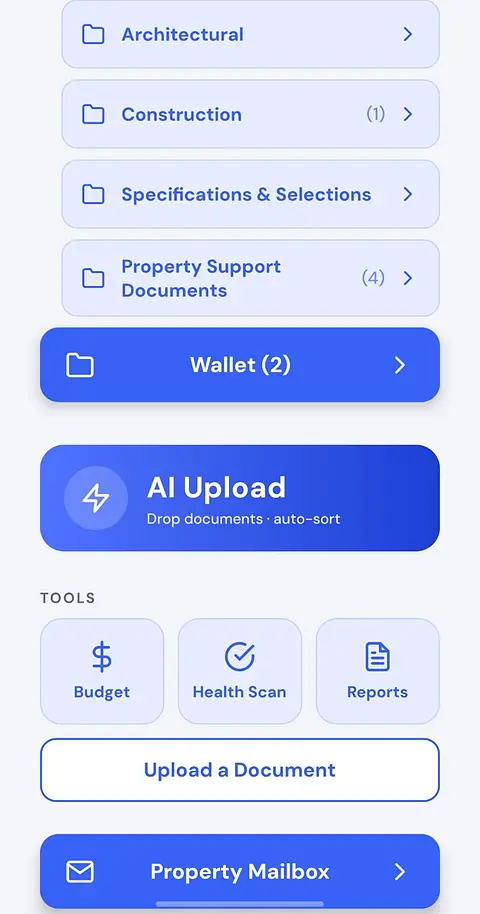
Property Bio
The folders, and the tools that run on what is in them.
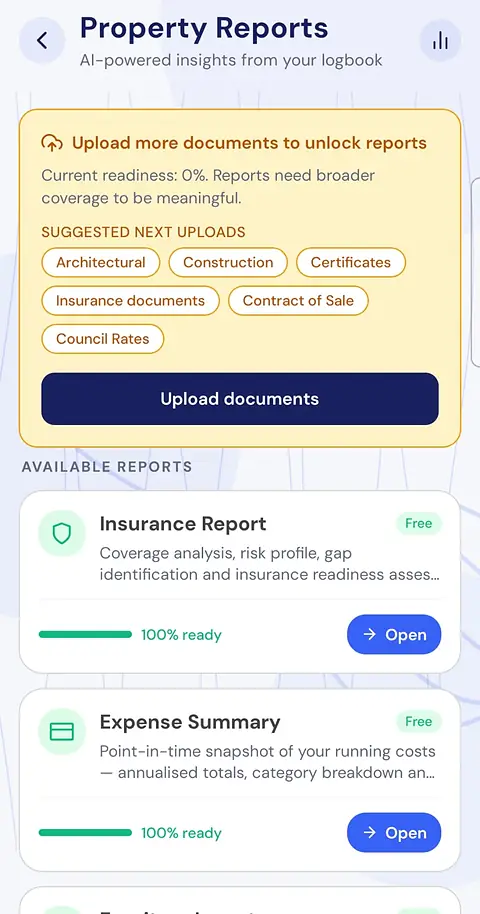
Property Reports
Reports read back what your own documents say, and nothing more.
Two moments where years of keeping records suddenly become useful.
Getting ready to sell?
A listing shows the home today. Your Logbook can show what happened before today.
Improvements. Maintenance. Warranties. Photos. Records.
Give your agent more to show and buyers more to understand.
Do not just show them the home. Show them its history.
Renewing home and contents insurance?
Your home's details, improvements, receipts, photos and records are already there.
Use the relevant information when your provider asks, instead of rebuilding the story from old emails and folders.
Do not start from scratch every time someone asks about your home.
Pass the home's history on. Take your personal records with you.
The home moves forward with its history. You move forward with yours.
When the home changes hands, the next owner can receive the history you spent years building: improvements, maintenance, records and the story behind the home.
Your personal information remains yours and moves with you.
What goes where, at sale
| Stays with the home | Plans, certificates, warranties, approvals, maintenance and work completed on the property |
| Stays with you | Your mortgage, your budget, your private quotes and your personal records, which can remain with your account and support the next property you register |
There is no charge to transfer a Logbook to the next owner.